



Sofia Airport
Wayfinding Redesign
A terminal-wide signage system that moved Sofia Airport from unranked to #1 in Europe for passenger way-ease.

Wayfinding
Accessibility
Strategic Design
Role: Creative Lead, Wayfinding Strategy & Design
Timeline: 3 Months
Tools used:

Figma

Illustrator

Photoshop

Teams
A strategic wayfinding system built for Schengen compliance, accessibility, and measurable passenger outcomes.
Sofia Airport
Wayfinding Redesign
A terminal-wide signage system that moved Sofia Airport from unranked to #1 in Europe for passenger way-ease.
Wayfinding
Accessibility
Strategic Design
Role: Creative Lead, Wayfinding Strategy & Design
Timeline: 3 Months
Tools used:
Figma
Illustrator
Photoshop
Teams
A strategic wayfinding system built for Schengen compliance, accessibility, and measurable passenger outcomes.
At a Glance
Sofia Airport's wayfinding system is a high-stakes operational product. It must work under stress, guide passengers through complex terminal flows, and remain clear across languages, distances, and decision points.
Key journeys: Check-in • Security • Gates • Baggage Reclaim • Arrivals • Connections
CHALLENGE
Following Bulgaria's Schengen accession in early 2024, Sofia Airport restructured passenger flows across Terminal 1 and Terminal 2. The existing wayfinding system was designed for pre-Schengen operations, ranked at the bottom of European airports for way-ease, and lacked consistent visual language across 200+ signage touchpoints.
RESULT
Sofia Airport achieved #1 ranking in Europe for "Ease of Finding Way" across three consecutive quarters (Q2, Q3, Q4 2024) in the ACI-ASQ benchmark—outperforming 350+ airports globally. The ranking improvement was immediate following implementation on April 1, 2024.
APPROACH
Designed a unified wayfinding system optimized for scan-readability, accessibility compliance (WCAG 2.1 AA), and Schengen-compliant passenger routing. The system included strategic signage placement analysis, bilingual content optimization (Bulgarian/English), color-coding for zone differentiation, and a scalable template system for future terminal expansions.
CREDIBILITY
As Creative Lead at Sofia Airport, I led the complete strategic design, visual concept, accessibility planning, and implementation oversight for this terminal-wide wayfinding system. The measurable impact - #1 in Europe ranking - validates the effectiveness of strategic wayfinding design in improving passenger experience at scale.
Signature features shipped
Terminal-Wide Signage Strategy
200+ configurations designed for consistent passenger flow.
• Strategic placement analysis across landside and airside zones
• Hierarchical signage system: primary directional, secondary wayfinding, tertiary zone markers
• Density mapping to reduce over-signage and visual noise
Why it matters: Prevents decision paralysis at critical navigation points.

Terminal-Wide Signage Strategy
200+ configurations designed for consistent passenger flow.
• Strategic placement analysis across landside and airside zones
• Hierarchical signage system: primary directional, secondary wayfinding, tertiary zone markers
• Density mapping to reduce over-signage and visual noise
Why it matters: Prevents decision paralysis at critical navigation points.
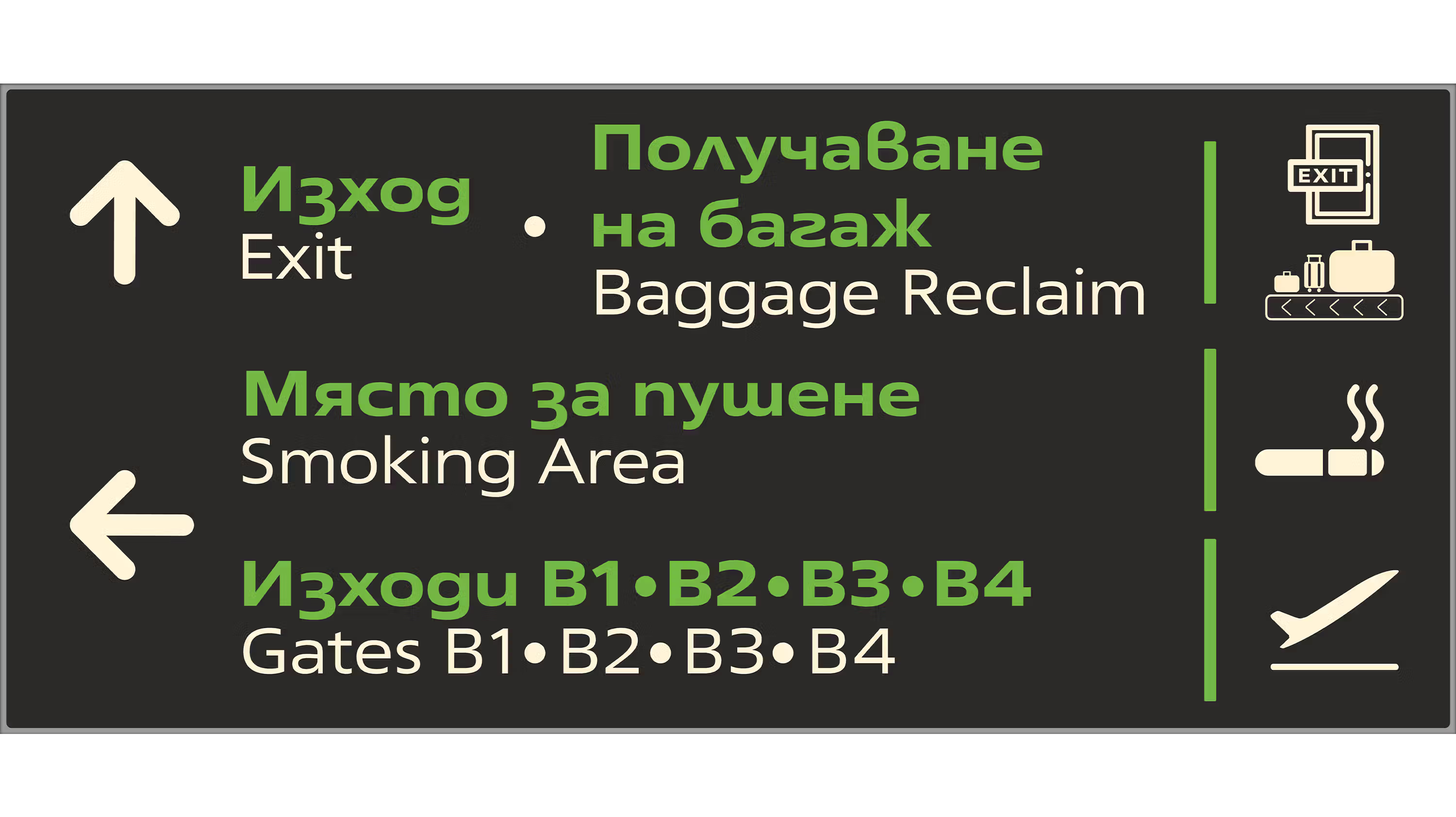
Bilingual Scan-Readability
Optimized for glance comprehension in Bulgarian and English.
• Language hierarchy testing for mixed-fluency passengers
• Icon system supporting text for universal comprehension
• Contrast ratios meeting WCAG 2.1 AA standards
Why it matters: Reduces cognitive load for international passengers under time pressure.
Bilingual Scan-Readability
Optimized for glance comprehension in Bulgarian and English.
• Language hierarchy testing for mixed-fluency passengers
• Icon system supporting text for universal comprehension
• Contrast ratios meeting WCAG 2.1 AA standards
Why it matters: Reduces cognitive load for international passengers under time pressure.
Accessibility-First Design
Built to WCAG 2.1 AA standards for inclusive navigation.
• High-contrast color systems safe for color-vision deficiencies
• Typography tested for readability at 10m, 20m, and 50m distances
• Tactile elements and visual hierarchy supporting diverse passenger needs
Why it matters: Ensures all passengers can navigate independently regardless of visual ability.
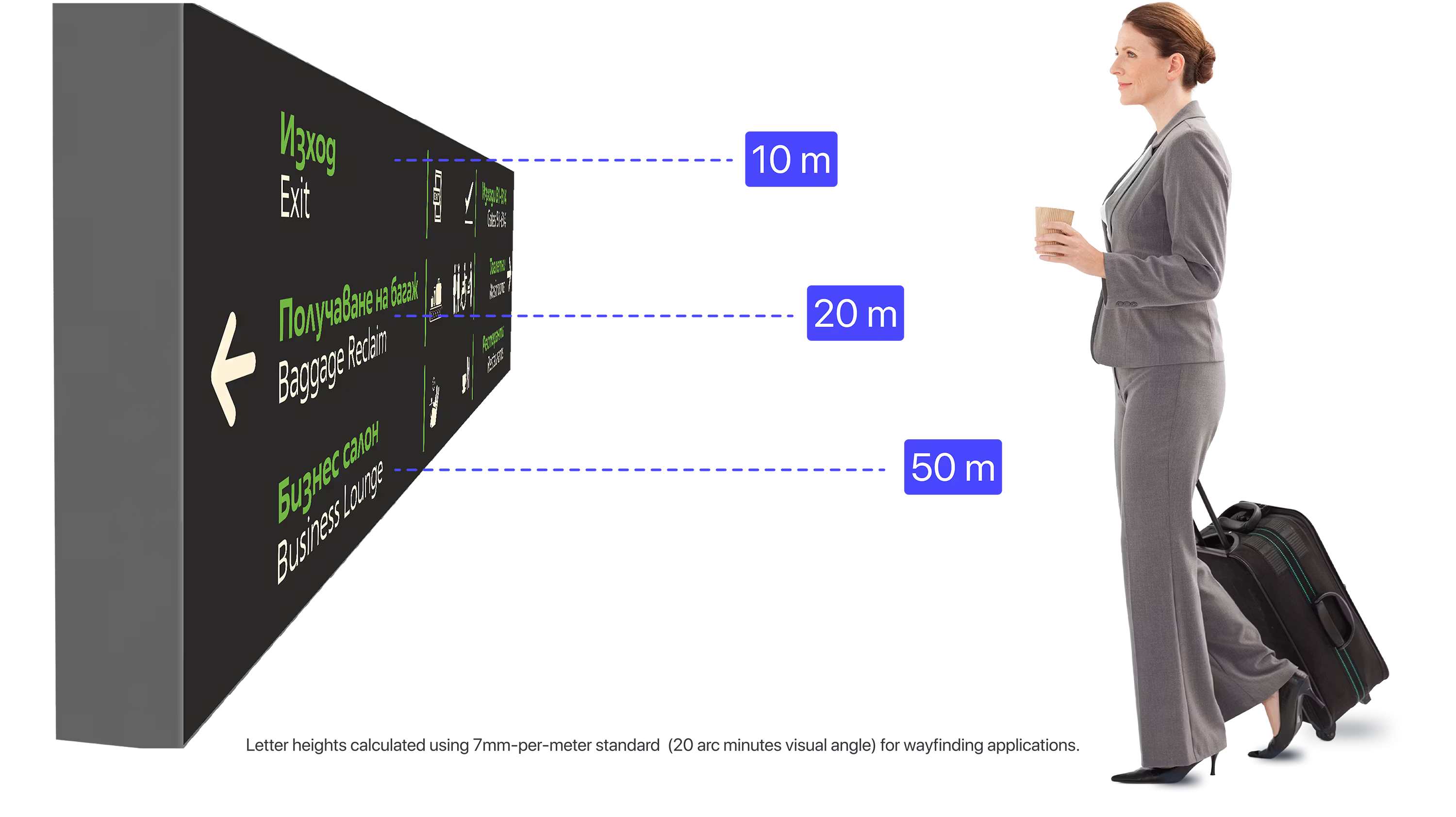
Accessibility-First Design
Built to WCAG 2.1 AA standards for inclusive navigation.
• High-contrast color systems safe for color-vision deficiencies
• Typography tested for readability at 10m, 20m, and 50m distances
• Tactile elements and visual hierarchy supporting diverse passenger needs
Why it matters: Ensures all passengers can navigate independently regardless of visual ability.
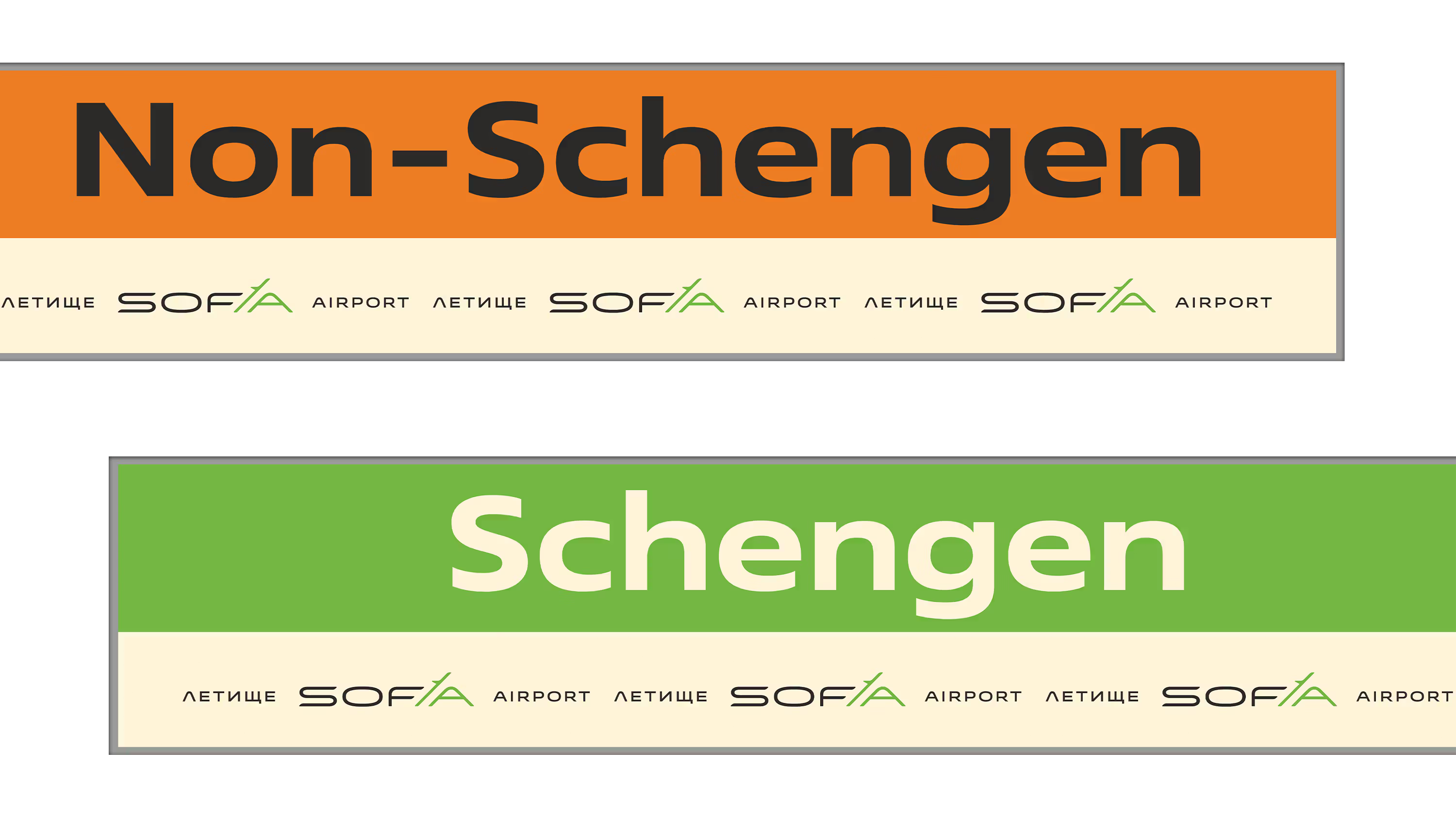
Schengen-Compliant Routing
Passenger flows redesigned for border control requirements.
• Clear separation between Schengen and non-Schengen zones
• Directional logic that prevents wrong-terminal navigation
• Emergency exit and security checkpoint visibility
Why it matters: Maintains compliance while reducing passenger confusion during terminal restructuring.
Schengen-Compliant Routing
Passenger flows redesigned for border control requirements.
• Clear separation between Schengen and non-Schengen zones
• Directional logic that prevents wrong-terminal navigation
• Emergency exit and security checkpoint visibility
Why it matters: Maintains compliance while reducing passenger confusion during terminal restructuring.
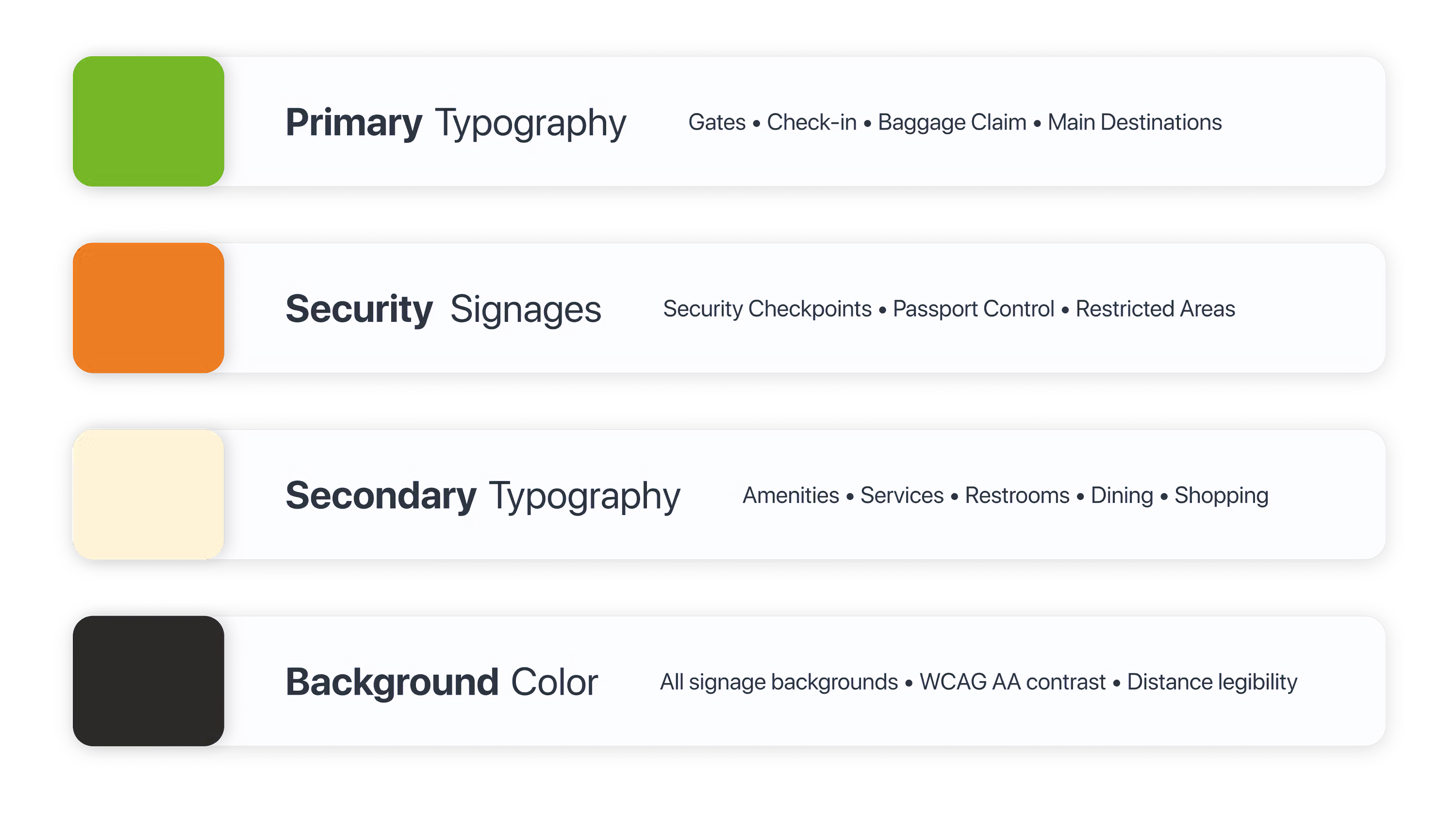
Color-Coded Zone System
Visual wayfinding support through strategic color coding.
• Zone differentiation through color accents (maintaining accessibility standards)
• Consistent application across overhead, wall-mounted, and floor-standing signs
• Integration with existing terminal architecture and lighting conditions
Why it matters: Provides additional navigation cues for passengers scanning quickly.
Color-Coded Zone System
Visual wayfinding support through strategic color coding.
• Zone differentiation through color accents (maintaining accessibility standards)
• Consistent application across overhead, wall-mounted, and floor-standing signs
• Integration with existing terminal architecture and lighting conditions
Why it matters: Provides additional navigation cues for passengers scanning quickly.

Scalable Template System
Modular design system for future terminal expansions.
• Component library for overhead, wall-mounted, floor-standing, and directional signs
• Naming conventions and layout standards for Terminal 3 readiness
• Design guidelines for consistent implementation across installation partners
Why it matters: Prevents visual drift and maintains system coherence as terminals expand.
Scalable Template System
Modular design system for future terminal expansions.
• Component library for overhead, wall-mounted, floor-standing, and directional signs
• Naming conventions and layout standards for Terminal 3 readiness
• Design guidelines for consistent implementation across installation partners
Why it matters: Prevents visual drift and maintains system coherence as terminals expand.
Passenger Intent is Directional
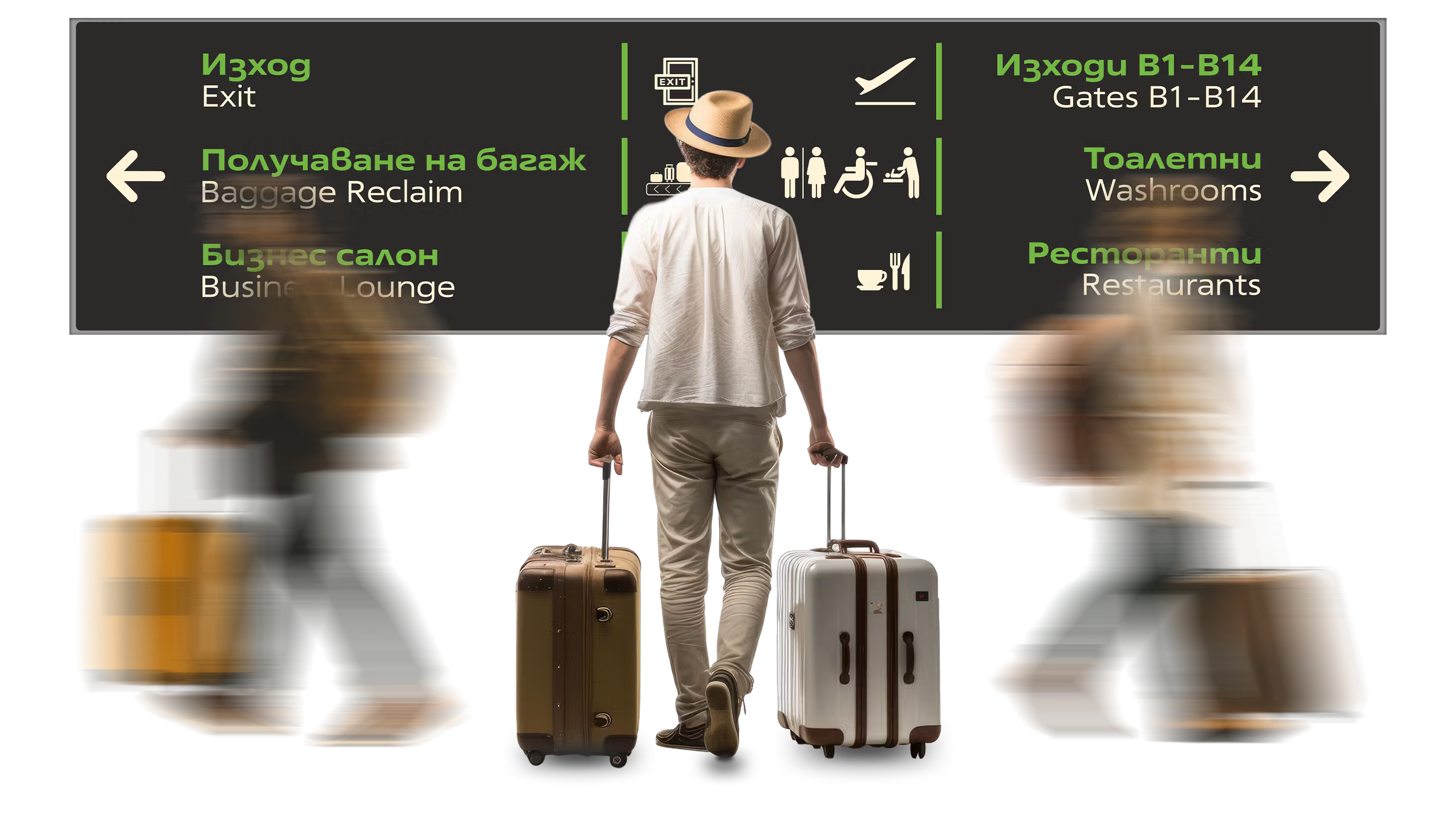
Airport passengers navigate under stress. They're late, they're pulling luggage, they're checking phones, they're looking for gates that just changed. Wayfinding must work in peripheral vision. The system is designed to reduce hesitation by surfacing destinations clearly, maintaining consistent visual language across zones, and staying legible from distance even when passengers are in motion.
Constraints
This redesign had to respect real operational constraints. It needed to work across two terminals with different architectural languages, handle Schengen border control requirements, remain accessible and legible from varying distances (10m to 50m), and support bilingual content without increasing cognitive load. The system also had to accommodate future Terminal 3 integration, work within existing lighting conditions, and maintain visibility across different times of day. The result is a scalable wayfinding framework that adapts to context while staying coherent across the airport network.
MEASURED IMPACT
ACI-ASQ Benchmark Results
Sofia Airport's wayfinding redesign delivered immediate, sustained, and third-party validated results. Following implementation on April 1, 2024, Sofia Airport achieved:
#1
Q2 2024
#1 in Europe
"Ease of Finding Way"
4.54
out of 5.00
Global rank: 103 / 357
#1
Q3 2024
#1 in Europe
"Ease of Finding Way"
4.54
out of 5.00
Global rank: 100 / 355
#1
Q4 2024
#1 in Europe
"Ease of Finding Way"
4.49
out of 5.00
Global rank: 113 / 365
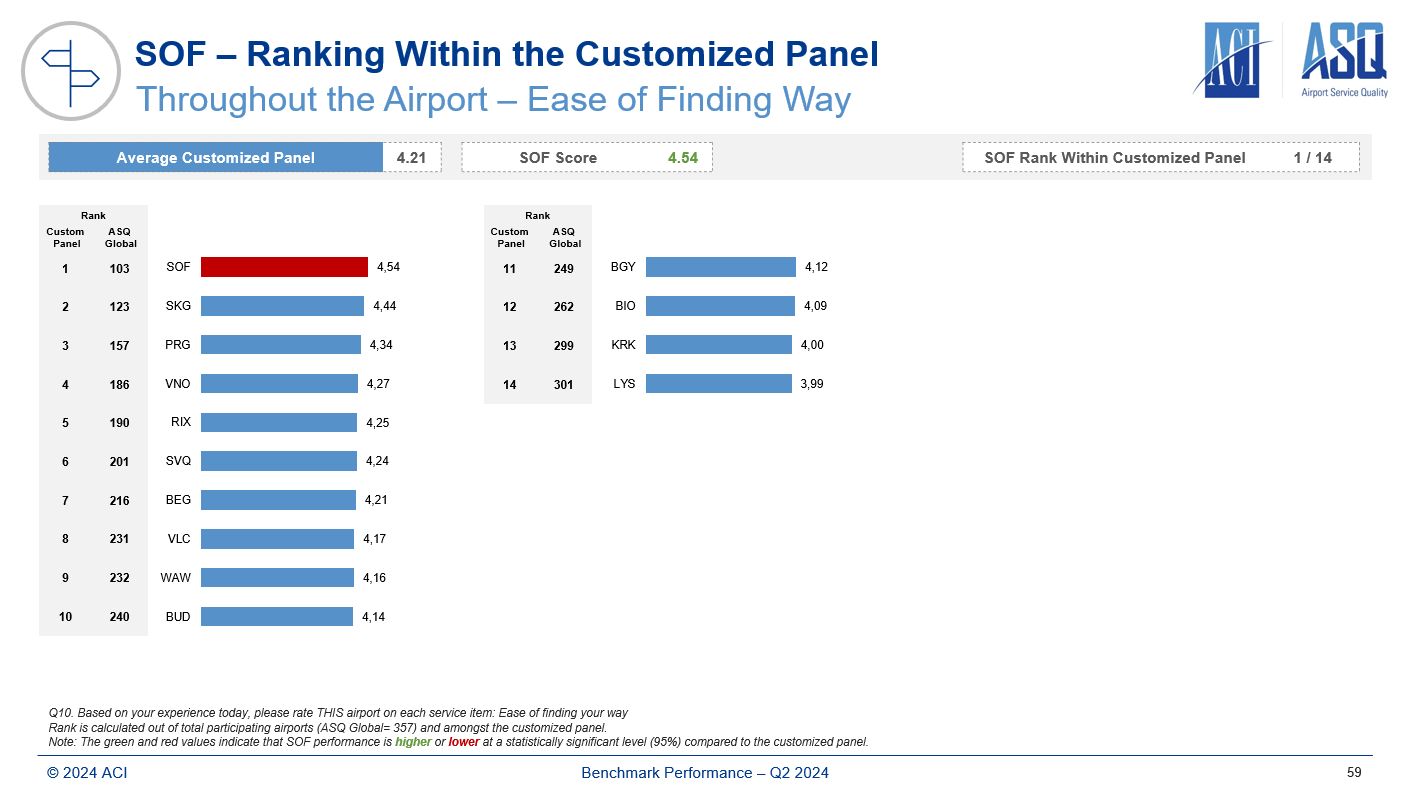
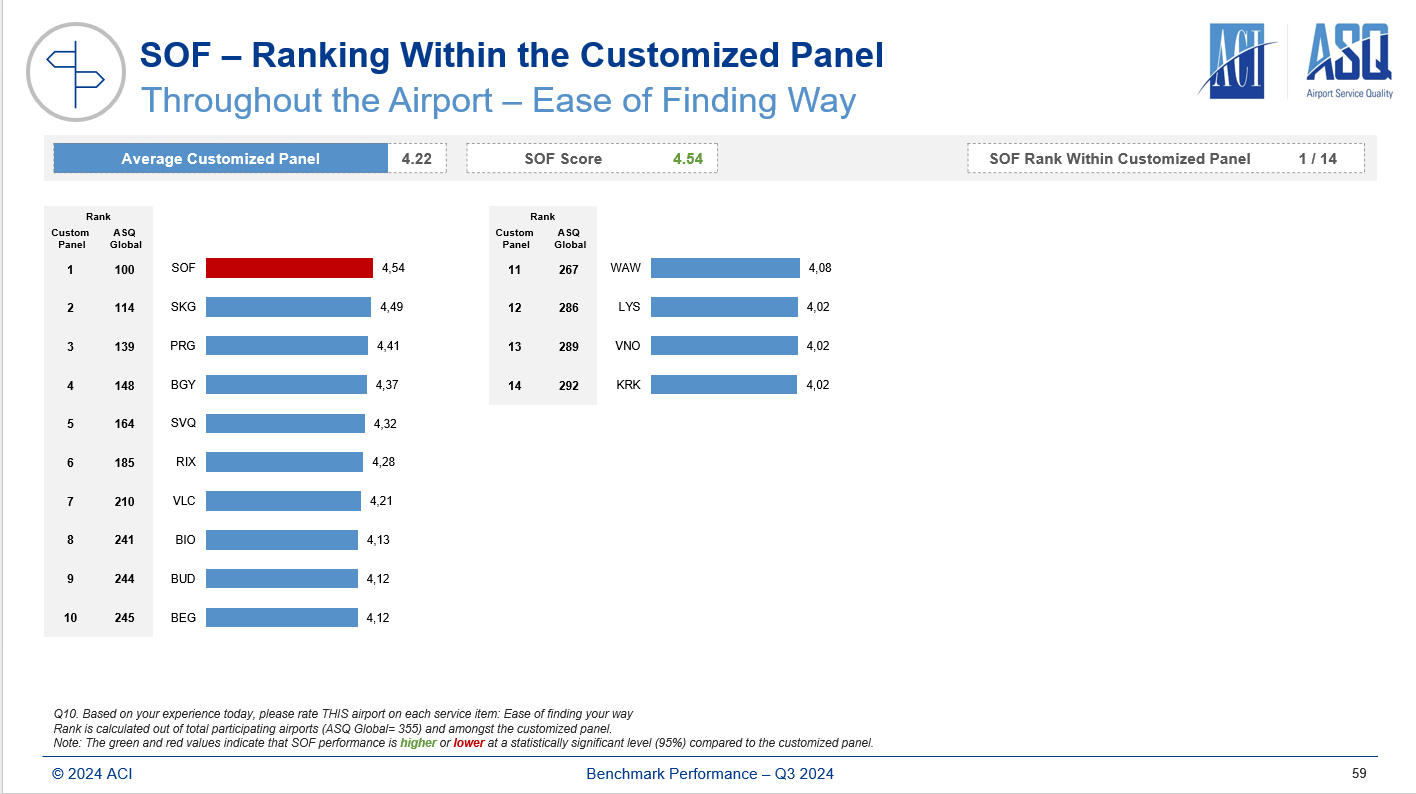
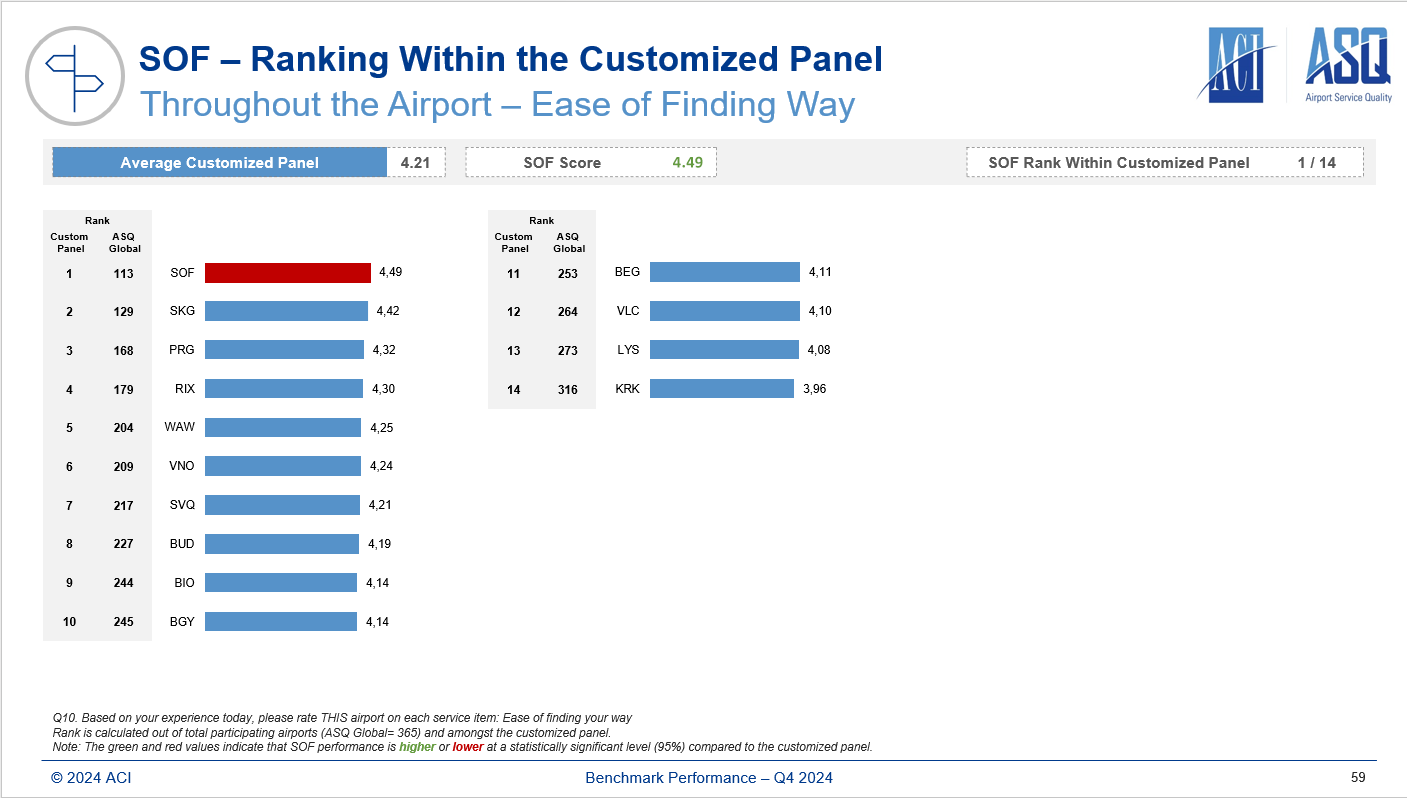
This ranking is measured through ACI-ASQ (Airports Council International — Airport Service Quality) passenger surveys across 350+ global airports. The immediate ranking improvement following April 1 implementation demonstrates the direct impact of strategic wayfinding design on measurable passenger experience outcomes.
Outperformed: Thessaloniki • Prague • Riga • Vilnius • Belgrade
Need a wayfinding system that delivers measurable passenger outcomes?
I help airports and infrastructure teams reduce navigation friction through strategic signage placement, accessibility-first design, and scalable systems that stay consistent under operational change.
More Case Studies
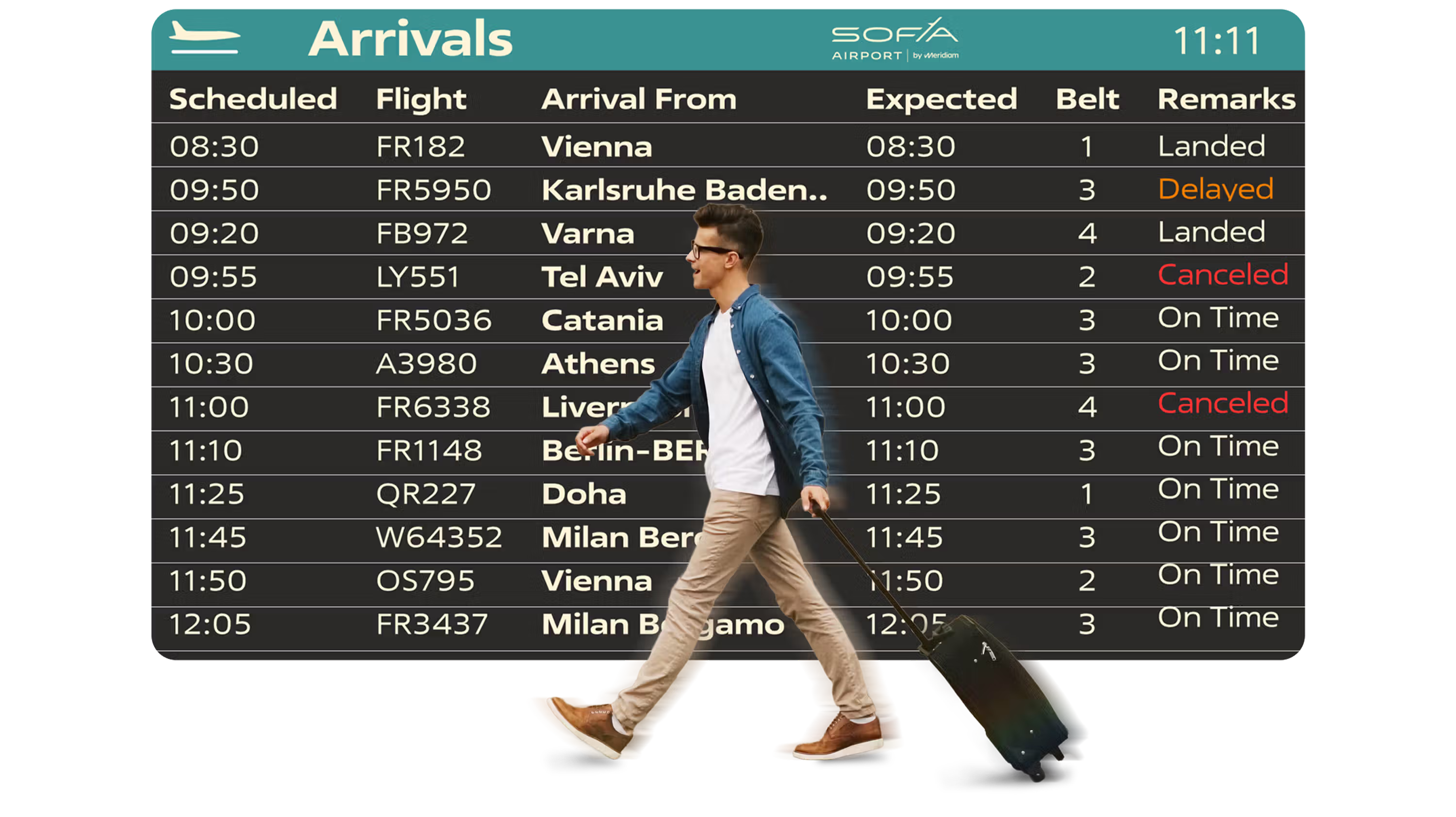
Sofia Airport FIDS
Designed a readable FIDS UX/UI system for distance viewing and speed.
View case study

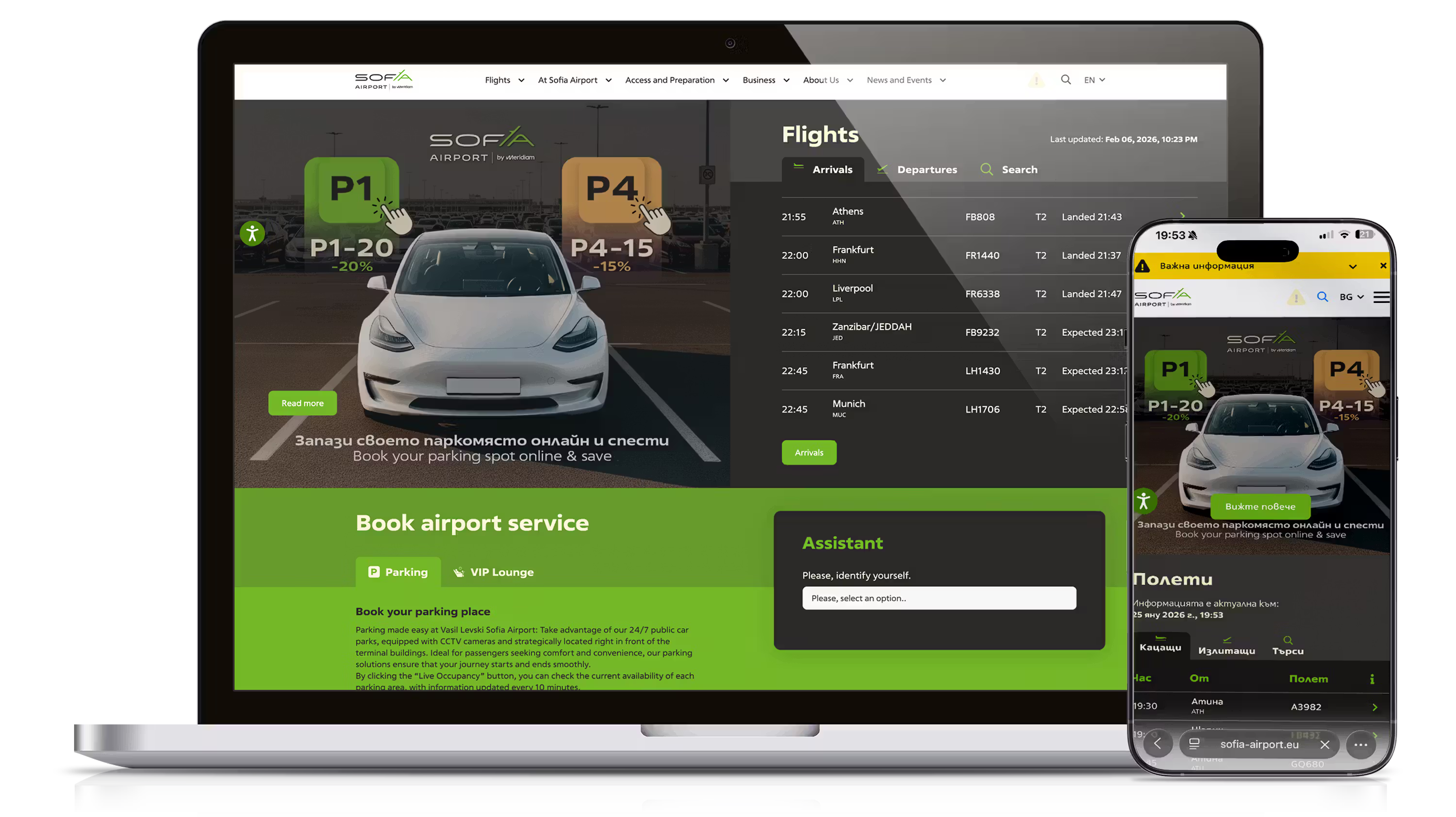
Sofia Airport Website
Rebuilt IA and task-first journeys. Unified templates for scalable updates.
View case study
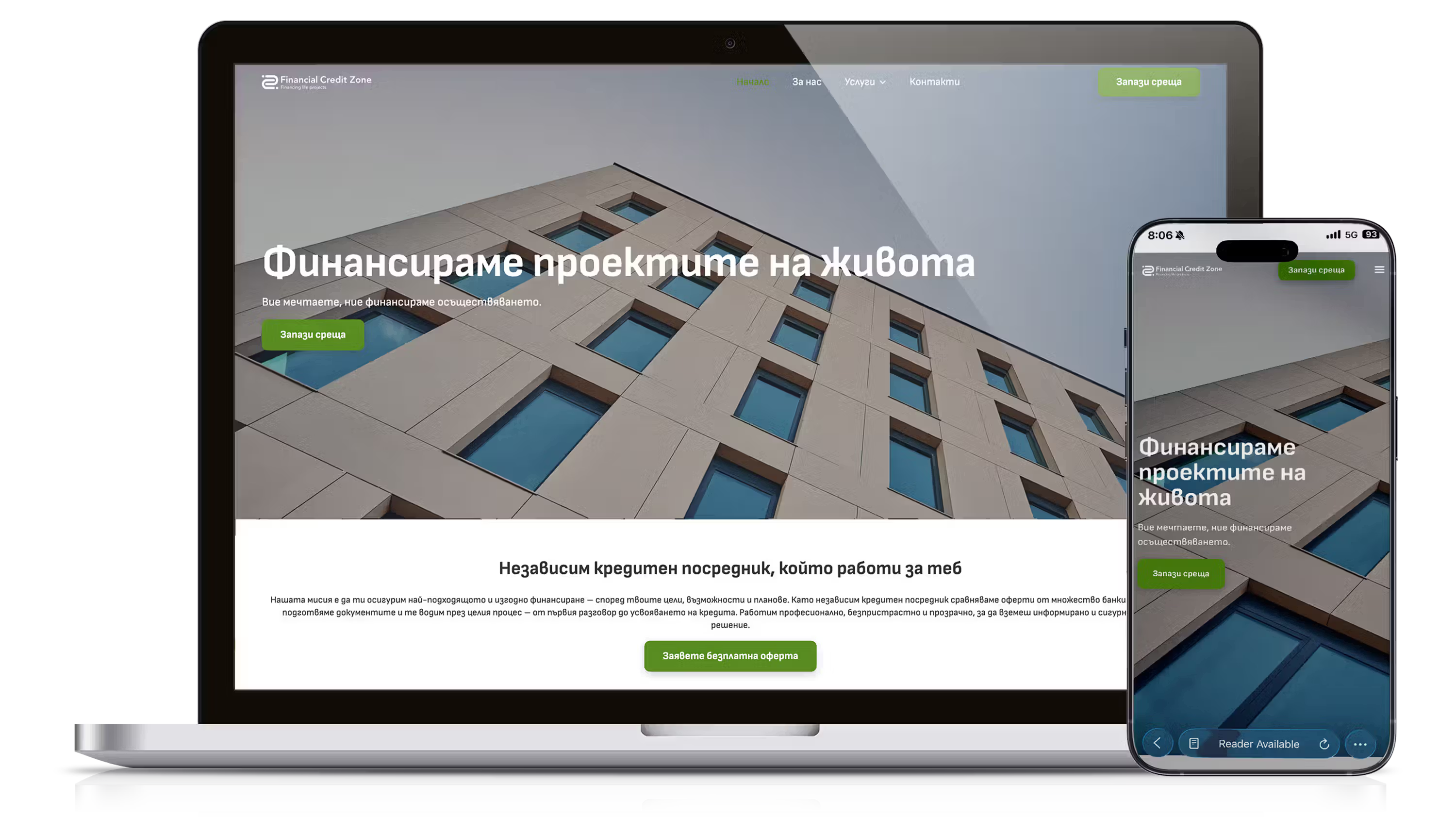
FCZone Website
Built brand, IA, and calculators with real-world fee logic.
View case study
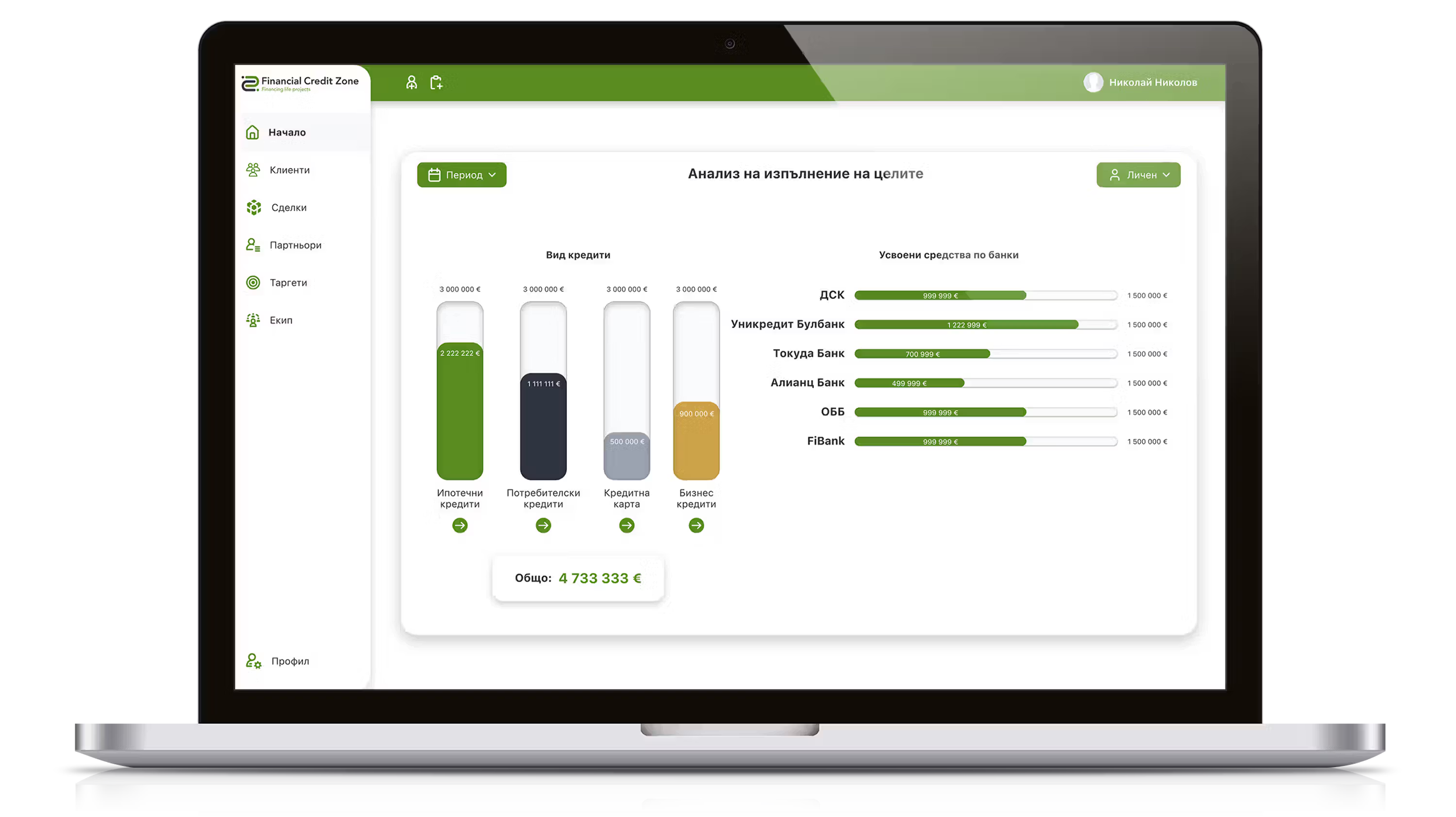
FCZone Custom CRM
Designed an automation-ready workflow that captures data once and stays traceable.
View case study
Strategic Product Design for high-stakes digital systems - UX/UI, IA & Webflow execution.


© Churkov, 2026